⚠️ Pivot Note: Original Dispensing Machine Design
All engineering work below was for the original automated bulk salt dispensing machine (hopper/auger in a shipping container). The pivot to a bucket exchange / locker model would be a significantly simpler build, leveraging existing PVC cage hardware from Propane Vending Corp rather than custom fabrication.
🎨 Render Gallery
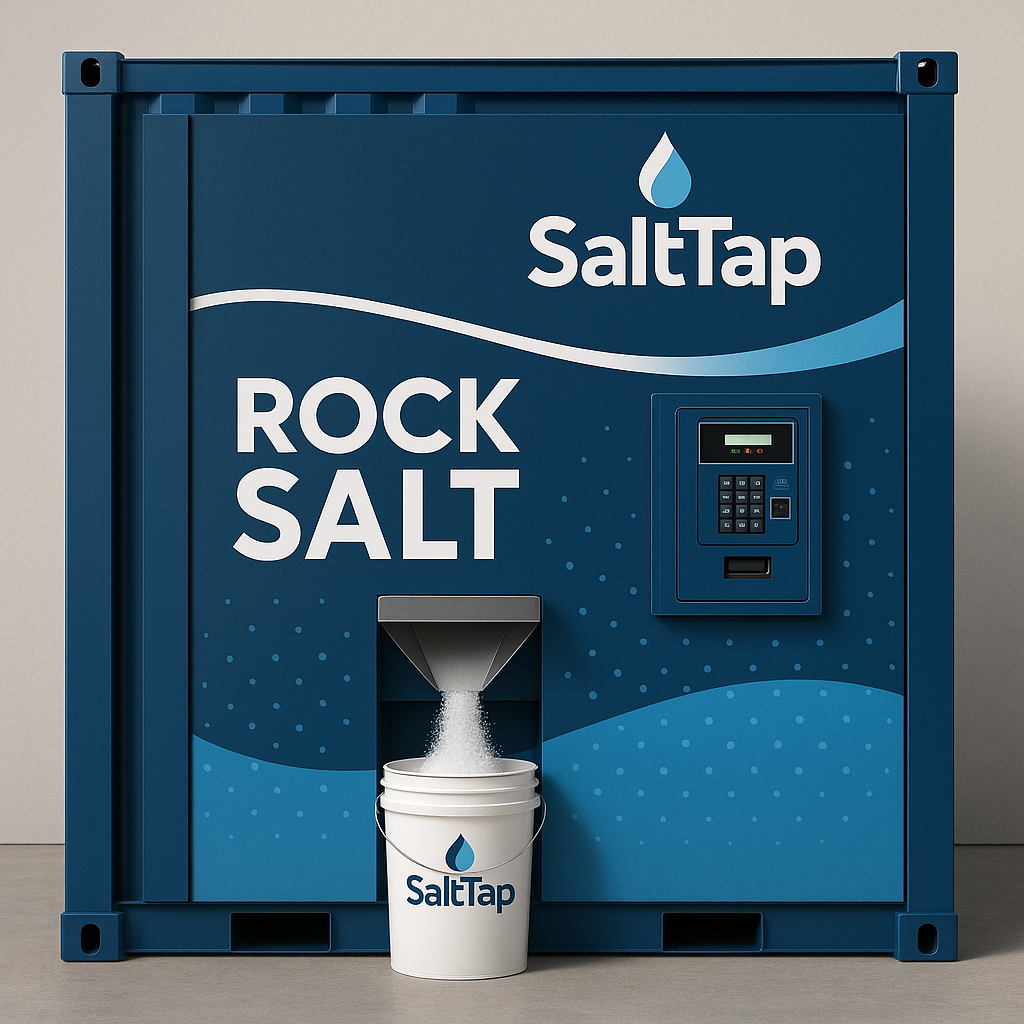
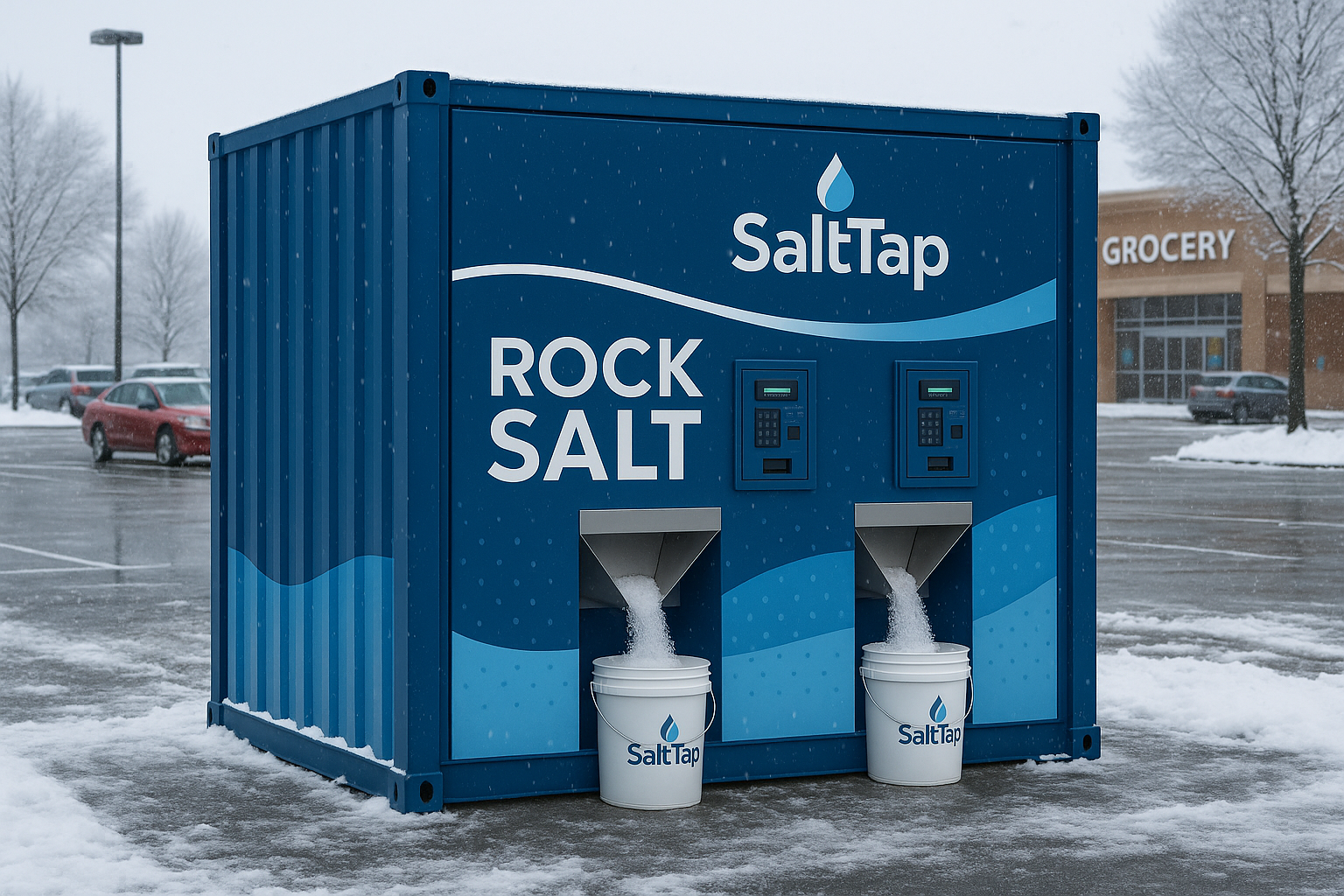
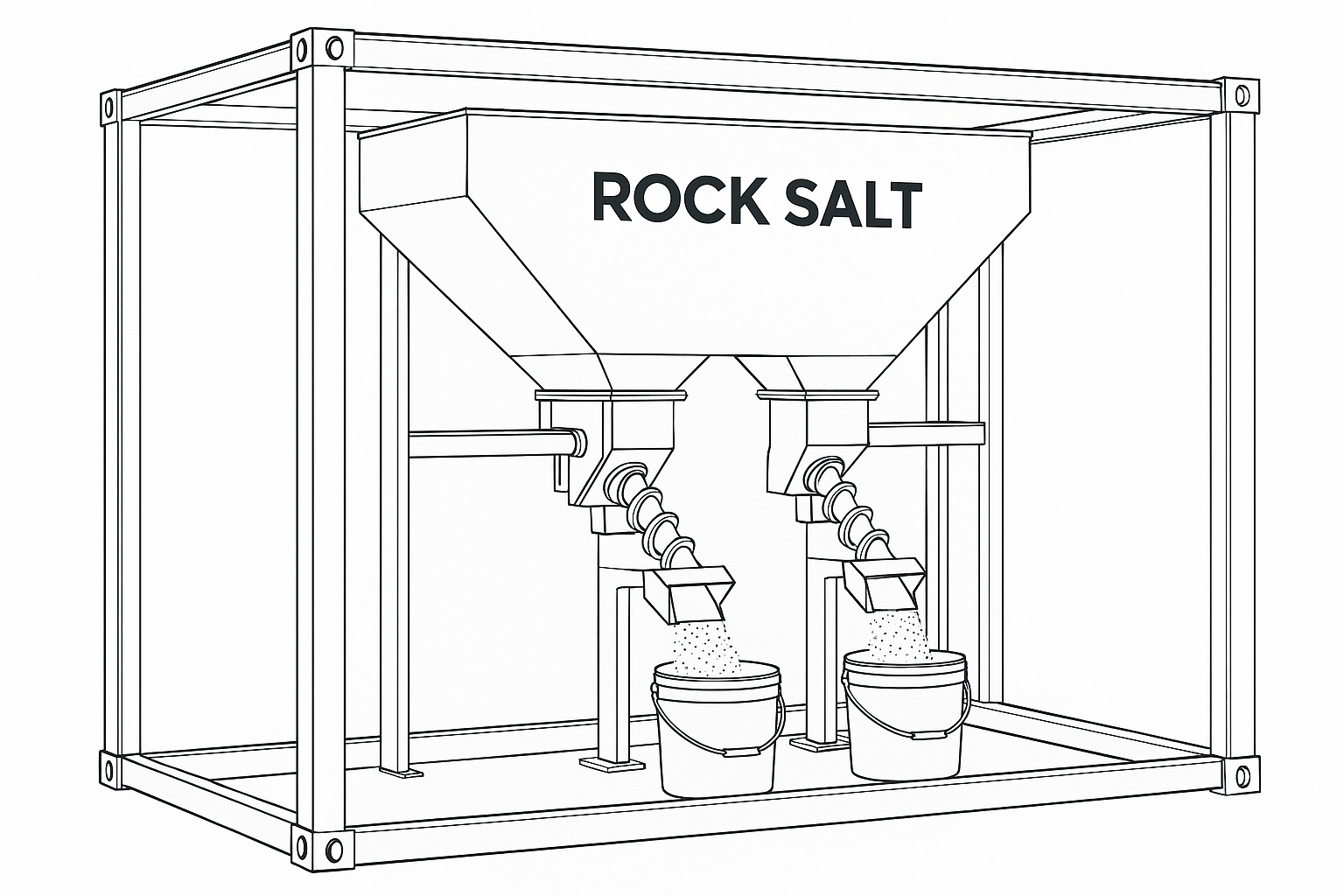
📅 Sprint Timeline
📋 Sprint Details
Designer: Lauren Gwin (UpWork) | Hours: 4–6
Scope
- Chute System (High Priority): Clean, jam-resistant chute that meters one bucketful; sensor placement for bucket detection and fill level
- Off-the-Shelf Prototype Integration: Visualize how a commercial spreader adapts into overall layout
- Scalable Concept Hopper: Refined hopper form maximizing full 8' container height with volume calculation
- User Interaction & Aesthetics: Visual presence, intuitive use, branding-forward physical design
Report: Two Build Options Identified
Option A — Mechanical Portioning:
- Open system (not enclosed for prototype), supported by custom frame
- Custom chute adapted to stock hopper/auger system
- Mechanically driven portioning wheel (electrically triggered, 60° rotation per bucket)
- Portioned for single 5-gal bucket; easily duplicated for dual dispensing
- Optional branded plastic bags for customers without buckets
Option B — Weight-Based Portioning:
- Same open frame approach with custom drop chute
- Auger drops salt until electric scale senses target weight
- Allows custom volume selection (1lb, 2lbs, 3lbs, etc.) for flexibility
- Electric gate valve between chute and hopper prevents uncontrolled dispensing
- More expensive (complex electrical system) but more flexible for customer
Key Finding: SaltDogg Pro 1500 has detachable spreader system — can easily exchange for custom chute. Rough layout estimates for custom salt hopper in 8' container completed.
Designer: Lauren Gwin | Hours: 5–6 | Date: June 28, 2025
Design Direction
Inspired by Primo 5-gallon water refill stations. Key deviation: side-sliding plexiglass door instead of swing-open (prevents breakage from snow plows, better winter operation, enables safety interlock).
Deliverables
- Concept sketch: chute drop path, bucket location, door track system, scale platform, grated spill tray
- 3D CAD model with chute, steel frame receptacle, sliding Lexan door, scale zone (~12"×12"), grated floor with removable spill tray
- Build notes: steel frame/chute (stainless or powder-coated), heavy-duty plexiglass door, door hardware annotations
Design Constraints
- Standard 5-gallon bucket size
- Door must slide (not swing) and activate safety interlock sensor
- Salt must drop cleanly without jamming
- Must operate in snow, cold, and unmonitored outdoor environments
- Modular — able to bolt onto full SaltTap enclosure
Deliverable: View 3D Model (Autodesk Viewer) →
Designer: Lauren Gwin | Hours: 5–6 | Date: July 10, 2025
Design Direction
Evolving Sprint 2's bucket hopper into a modular front panel for shipping container or building mount. Integrates SaltDogg 147 Series commercial spreader on internal sled.
Objectives
- Fully integrated bucket chute and sliding door system (building off Sprint 2)
- Slim top-access front-facing fill door for salt loading above customer interface
- Mounting structure for standard shipping container dimensions (10' / 20')
- Vertical clearance for hopper and chute alignment
CAD Assembly Includes
- Receptacle integrated into full-width front panel
- Framing/bolting flanges for container attachment
- Top-access hatch aligned above hopper
- Optional branding/signage faceplate
- Payment terminal location and UI placement
Deliverable: Sprint 3 STP file on file (49 MB)
Designer: Lauren Gwin | Hours: 5–6 | Date: July 26, 2025
Design Direction
Advancing toward prototype readiness. Focused on internal layout refinement and accurate fitment of SaltDogg 147 Series spreader (model 14708F467211).
Key Objectives
- SaltDogg Spreader Modeling: Simplified 3D model with mounting frame/stand; auger output alignment with receptacle zone
- Bucket Receptacle Refinement: Resized for max 5-gal bucket (12" top dia, 10.25" bottom, 15" height) + 4" clearance above for handle grip
- Chute & Flow Path: Optimal angle/geometry for salt flow from spreader output to bucket chute; angle of repose >30–35°; serviceable internal deflector
Prototype Approach
Working prototype will be built without a shipping container — constructed in a driveway using a smaller substitute salt spreader as the hopper, enabling early testing of electronics, dispensing behavior, and user interaction.
🏗️ Enclosure Research
Options Explored
- Shelterworks (shelterworks.com) — Custom base and frame with prefab housing over it
- Shipping Container — With epoxy or bed liner coating for weather protection
- Shipping Containers of New England — pricing reference
- Aaron Supreme — additional vendor