
2. Inventor
Keith Aubin
Massachusetts, United States
3. Abstract
4. Field of the Invention
The present invention relates generally to automated dispensing systems for granular bulk materials. More particularly, the invention pertains to self-service vending and exchange kiosks for metered distribution of granular de-icing materials, including but not limited to sodium chloride, calcium chloride, and magnesium chloride compositions, with integrated multi-product blending, weather-responsive dynamic pricing, container exchange functionality, and seasonal infrastructure conversion capabilities. The invention further relates to modular dispensing systems designed for unattended outdoor operation in harsh winter conditions, compatible with existing retail cage and locker infrastructure for scalable commercial deployment.
5. Background of the Invention
5.1 Current State of Ice Melt Distribution
The distribution of de-icing materials to residential and small commercial consumers in the United States is overwhelmingly reliant upon pre-packaged retail sales through hardware stores, home improvement centers, grocery stores, and gas stations. Consumers typically purchase de-icing salt, calcium chloride pellets, magnesium chloride pellets, or proprietary blends in pre-packaged bags ranging from 10 to 50 pounds. This distribution model has remained essentially unchanged for decades, despite significant advancements in retail automation, self-service technologies, and consumer expectations for convenience.
The United States de-icing materials market exceeds $2 billion annually, with residential and small commercial consumers accounting for a substantial portion of demand. Demand is highly seasonal, concentrated in the months of October through April in northern climates, and is intensely weather-dependent, with consumption spiking dramatically in the 24 to 48 hours preceding and during winter storm events.
5.2 Limitations of Existing Solutions
The current retail distribution model for de-icing materials presents numerous deficiencies:
- Availability limitations. Retail stores operate on fixed hours and frequently experience stockouts immediately preceding and during winter storms — precisely when consumer demand is highest.
- Physical handling burden. De-icing materials are dense and heavy. A standard 50-pound bag requires significant effort, particularly for elderly, disabled, or physically limited consumers.
- Lack of product customization. Consumers cannot select or customize the de-icing product formulation at the point of sale.
- Pricing inflexibility. Retail prices are fixed regardless of weather conditions, demand levels, or inventory availability.
- Seasonal infrastructure underutilization. Existing retail infrastructure for seasonal products — particularly outdoor display cages used for propane tank exchange — sits idle during the opposite season.
5.3 Gap in Prior Art
A comprehensive search of existing patents reveals no prior art for automated dispensing of granular de-icing materials through self-service kiosks, vending machines, or exchange systems. Adjacent prior art categories (ice vending, general auger vending, dynamic pricing vending, heated food dispensing, reverse vending, de-icing formulation patents, and propane exchange systems) are all distinguished from the present invention.
The present invention addresses a clear gap in the prior art by providing the first automated, self-service system for dispensing, blending, and exchanging granular de-icing materials, with weather-responsive dynamic pricing, multi-product blending at the point of sale, and seasonal infrastructure conversion capability.
6. Summary of the Invention
The present invention is an automated, modular system for self-service dispensing and exchange of granular de-icing materials, designed for unattended outdoor operation at retail locations including gas stations, convenience stores, grocery stores, and other commercial sites.
The system comprises the following principal novel elements:
- Single-Hopper + Liquid CaCl₂ Injection. Single dry NaCl hopper with liquid calcium chloride injection system at point of dispensing, enabling multi-product output (Basic, Pro, Pet) from simplified single-hopper architecture.
- Precision Metered Dispensing with Multi-Sensor Fill Control. IR break-beam sensors, platform load cells with tare compensation, ultrasonic fill-level monitoring, and capacitive overflow detection — a three-tier overflow prevention system.
- Weather-Responsive Dynamic Pricing. Pricing engine connected to NWS, NOAA, or commercial weather APIs; automatically adjusts pricing based on predicted precipitation, temperature, and storm severity.
- Hybrid Dispensing and Container Exchange. Bulk dispensing mode and exchange mode from a unified control system with container tracking and deposit credits.
- Anti-Caking Material Conditioning. Vibration motors, low-wattage heaters, and mechanical bridge-breaker agitators maintain flowability of hygroscopic de-icing materials.
- Cage-Compatible Form Factor with Seasonal Conversion. Compact enclosure (~48″ × 30″ × 48″) compatible with standard retail propane exchange cage mounting locations.
- Ground-Level Refill System. Secondary intake hopper at pickup truck bed height with flexible screw conveyor.
- Cloud-Connected Remote Management. Cellular telemetry for real-time monitoring, diagnostics, and remote control.
7. Brief Description of Drawings
See the Figure Gallery below for all 10 patent figures with reference tables.
- FIG. 1 — External perspective view of the dispensing system enclosure
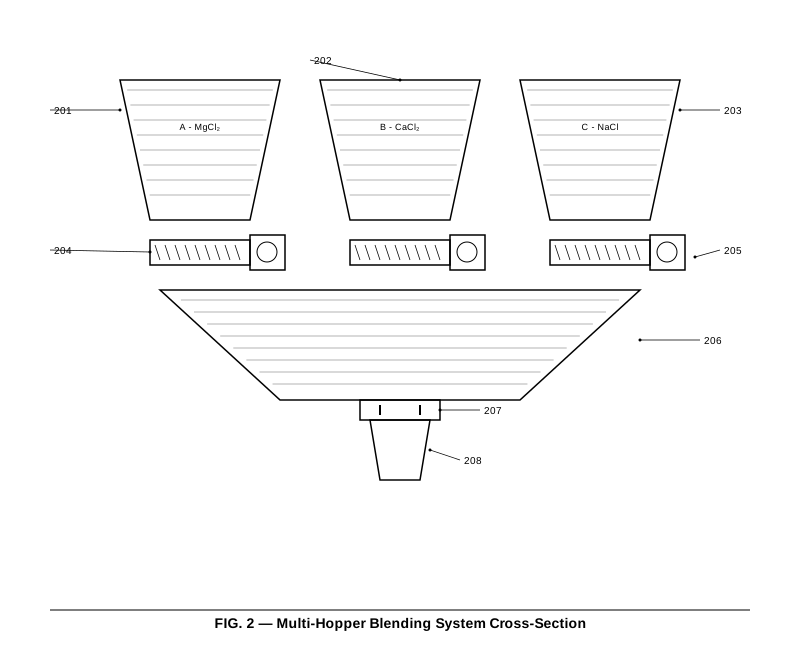
- FIG. 2 — Multi-hopper blending system cross-section
- FIG. 3 — Container detection & fill control detail
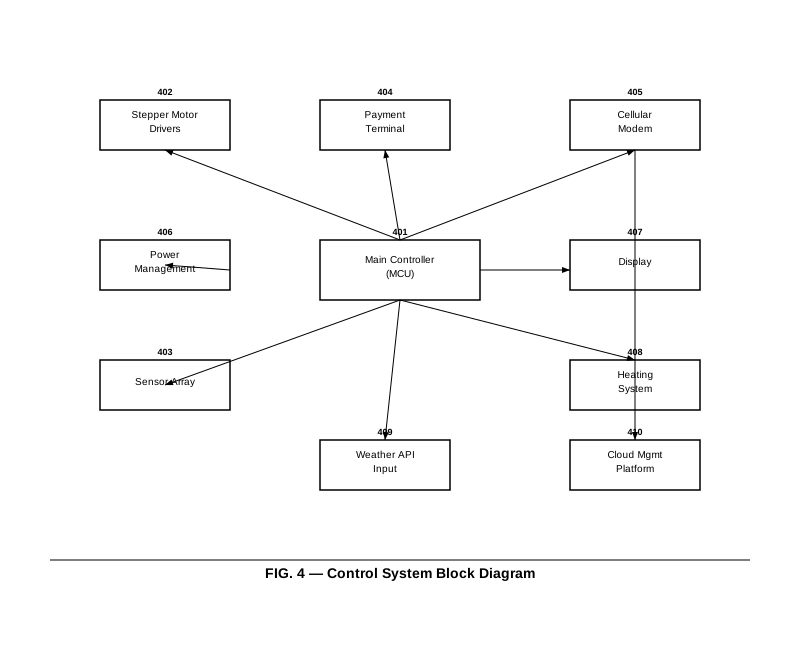
- FIG. 4 — Control system block diagram
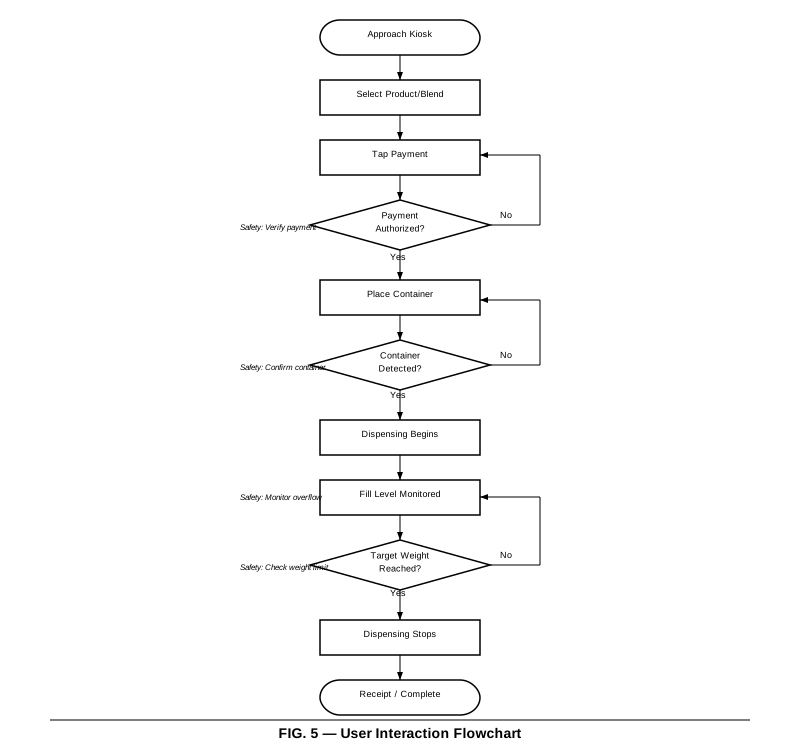
- FIG. 5 — User interaction flowchart
- FIG. 6 — Ground-level refill system
- FIG. 7 — Hybrid exchange + dispensing layout
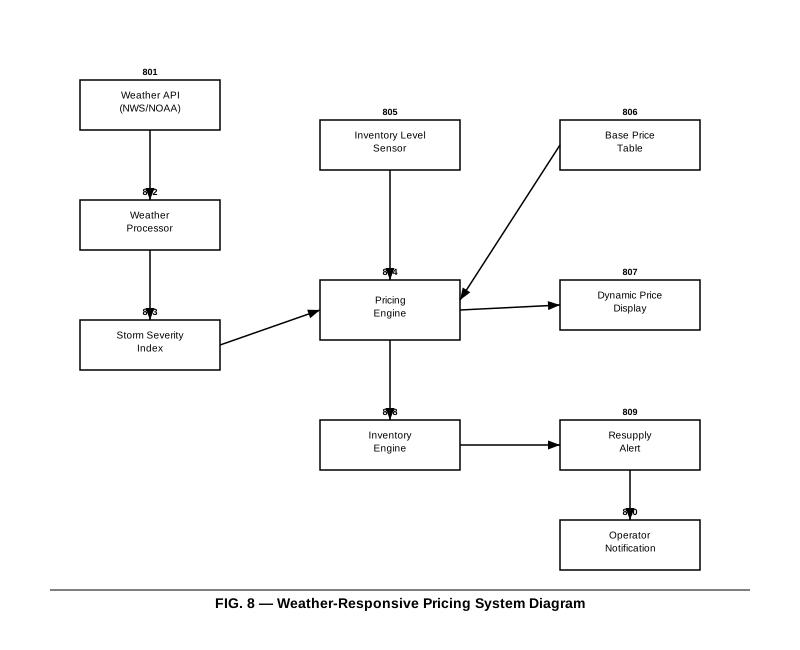
- FIG. 8 — Weather-responsive pricing system diagram
- FIG. 9 — Seasonal conversion concept
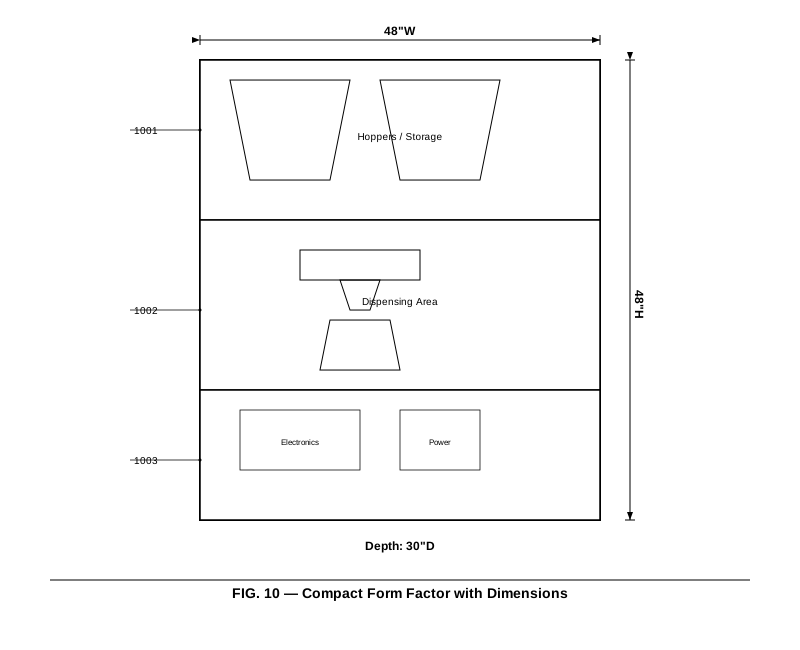
- FIG. 10 — Compact form factor with dimensions
8. Detailed Description of Preferred Embodiments
8.1 Structural Enclosure and Form Factor
Referring to FIG. 10, the system is housed within a weatherproof enclosure of approximately 48″W × 30″D × 48″H, compatible with standard retail propane exchange cage mounting locations. The enclosure comprises a welded 304 stainless steel frame with 16-gauge 304 stainless steel panels, powder-coated with UV-stable polyester.
The enclosure is organized into three functional zones:
- Zone 1 — Storage (upper 24″): Single NaCl hopper + liquid CaCl₂ reservoir with lockable, gasketed lids. Sloped roof with 5° pitch for rain/snow shedding.
- Zone 2 — Dispensing (middle, 10–24″ above ground): Metering augers, blending chamber, discharge chute, and container receptacle with guide rails and platform scale. 14″ × 16″ customer access opening at waist height.
- Zone 3 — Interface & Electronics (front face, 30–48″): Payment terminal (~40″), 7″ weatherproof LCD touchscreen (~42″), status LEDs, NEMA 4X electronics enclosure housing ESP32 controller, motor drivers, relay board, power supplies, and cellular modem.
Empty weight: ~185 lbs. Maximum loaded weight: ~935 lbs.
8.2 Multi-Product Hopper and Blending System
The primary architecture comprises a single dry NaCl storage hopper with metering auger, paired with a liquid CaCl₂ injection system at the dispensing output. This single-hopper + liquid injection design enables three product tiers (Basic, Pro, Pet) from a simplified mechanical system.
Hopper Construction
Each hopper: 0.500″ wall HDPE or 14-gauge 316L stainless steel, truncated pyramid with ≥55° wall angle. Three-hopper config: ~14″ × 26″ × 18″ internal (~150–200 lbs each). Two-hopper config: ~21″ × 26″ × 18″ (~225–275 lbs each).
Metering Auger Assembly
3″ OD 304 stainless auger screw, 1.5″ pitch, single-flight helical, 12″ effective conveying length. NEMA 23 stepper motors (3.0A, 2.2 N·m) with flexible jaw couplings. At 1/16 microstepping: 3,200 steps/rev yielding ~0.00012 lbs/microstep resolution — far exceeding the ±5% blend accuracy target.
Product Tiers (3-Tier Line)
- Basic ($10.99): 100% NaCl dispensed as-is from single hopper
- Pro ($14.99): NaCl + liquid CaCl₂ injection at point of dispensing — enhanced melt performance
- Pet ($32): Prefilled MgCl₂/CaCl₂ buckets in locker array — no dispensing required
Blended margin across product line: ~68%.
8.3 Auger-Based Metered Dispensing Mechanism
Horizontally mounted auger-style screw conveyors provide precise volumetric metering. The 3″ OD / 1.5″ pitch geometry is optimized for 2–8mm de-icing pellets. Radial clearance of 0.125″ balances metering accuracy against particle variation tolerance.
Motor stall detection via drive current monitoring triggers anti-caking subsystem activation and retry. Persistent stalls alert the operator via cellular telemetry with graceful degradation to reduced product offering.
8.4 Container Detection and Fill Control System
Referring to FIG. 3, a multi-sensor approach provides redundancy and fail-safe operation:
- Container Presence: Two pairs of through-beam IR sensors at 2″ and 8″ above platform — both must be interrupted to enable dispensing.
- Container Alignment: Four HDPE guide rails in truncated cone pattern center 8–12″ diameter containers.
- Weight Monitoring: Four 50kg half-bridge load cells in Wheatstone bridge with HX711 24-bit ADC. 10 Hz sample rate, tare function, predictive cutoff algorithm (halts ~0.3–0.5 lbs before target). Accuracy: ±0.5 lbs at 25 lbs (±2%).
- Ultrasonic Fill Level: IP67 sensor aimed downward into container — emergency stop if material within 1″ of rim.
- Three-Tier Overflow Prevention: (1) Load cell target → stop; (2) Ultrasonic rim detection → stop; (3) Capacitive sensor at discharge lip → hardware relay interlock independent of microcontroller.

8.5 Anti-Caking and Material Conditioning Subsystem
Referring to FIG. 9, a three-pronged approach for hygroscopic materials (especially CaCl₂ and MgCl₂):
- Vibration: DC vibrator motors (12V, 65 Hz, 50 lbs force) with pre-dispense pulse, intermittent cycling, scheduled maintenance bursts, and on-demand flow-blockage activation.
- Low-Wattage Heating: Silicone heater pads (120V AC, 50–100W each) maintain wall temp ≥40°F when ambient <35°F. Snap-disc thermostat + 194°F thermal fuse. Total: 150–300W for three hoppers.
- Bridge-Breaker: 0.500″ 304 SS shaft with two UHMW paddles, 5–10 RPM gearmotor. Runs during dispensing, 10-sec bursts every 2h idle, and on-demand.
All material-contact surfaces: HDPE, UHMW, electropolished 304/316 SS, optional PTFE coating.
8.6 User Interface and Payment System
Weatherproof 7″ LCD touchscreen at ~42″ height + contactless payment terminal at ~40″. Supports NFC (credit/debit/Apple Pay/Google Pay), QR code payment, and optional RFID. ESP32-WROOM-32 controller with SIM7600G 4G LTE modem, MQTT telemetry at 60-sec intervals.
8.7 Weather-Responsive Dynamic Pricing Engine
Connected to NWS, NOAA, and/or commercial weather APIs (polled every 30 min). Multi-factor pricing algorithm considers: precipitation type/probability, accumulation, storm duration, temperature, severity classification, inventory level, time-of-day patterns, and historical sales.
Tiered Storm Severity Model
| Forecast | Multiplier |
|---|---|
| No precipitation within 48h | 1.0× |
| Light snow / flurries | 1.0–1.25× |
| Moderate snow (3–6″) | 1.25–1.5× |
| Heavy snow (6–12″) / ice storm | 1.5–2.0× |
| Blizzard conditions | 2.0–2.5× |
Maximum price caps configurable by operator and subject to price gouging regulations. Automated resupply notifications when predicted 48h demand exceeds inventory.
8.8 Remote Monitoring, Telemetry, and Inventory Management
SIM7600G 4G LTE cellular modem. MQTT protocol: 60-sec intervals during transactions, 15-min during idle. Telemetry: hopper levels (ultrasonic), transaction records, motor parameters, anti-caking status, environmental data, power status, faults. Cloud dashboard with real-time status, historical analytics, multi-unit fleet management, and remote commands (emergency stop, enable/disable, pricing updates).
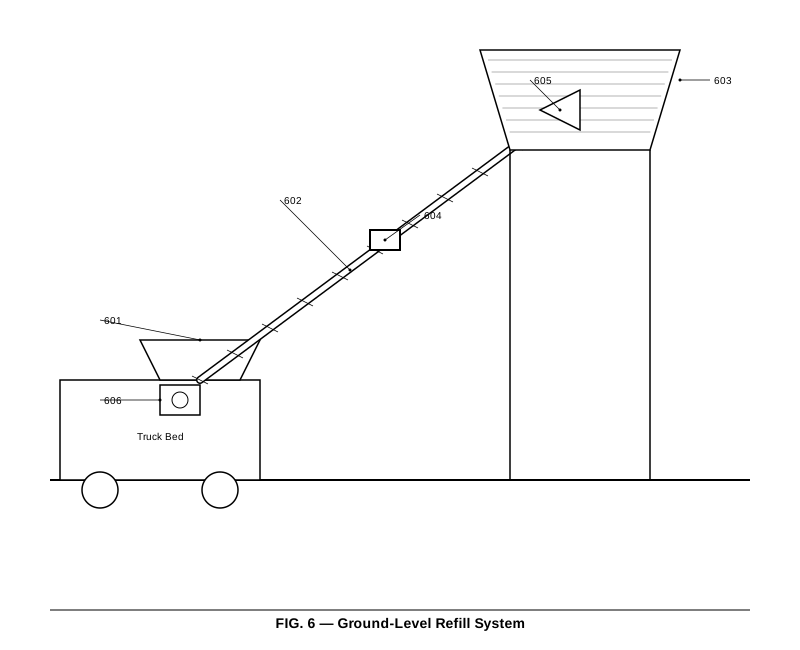
8.9 Ground-Level Refill System
Referring to FIG. 6, the refill system enables replenishment from pickup truck bed height (~30–36″) without forklifts:
- Intake Hopper: HDPE, 3–4 cu ft (~200–280 lbs), 24″ × 18″ opening, 55° taper, lockable lid with 2″ standpipe rim.
- Flexible Screw Conveyor: 3″ OD helical wire in 3.5″ ID UHMW tube, 24″ min bend radius, ~6–7 ft total. 120V AC ½ HP gearmotor (top-mounted, pull operation). Throughput: ~300–500 lbs/hr.
- Distribution Manifold: 3-way 304 SS diverter valve with operator-selectable hopper destination. 4″ tri-clamp quick-disconnect for seasonal removal.
Ultrasonic level sensors provide automatic conveyor shutoff. Dispensing can continue during refilling.
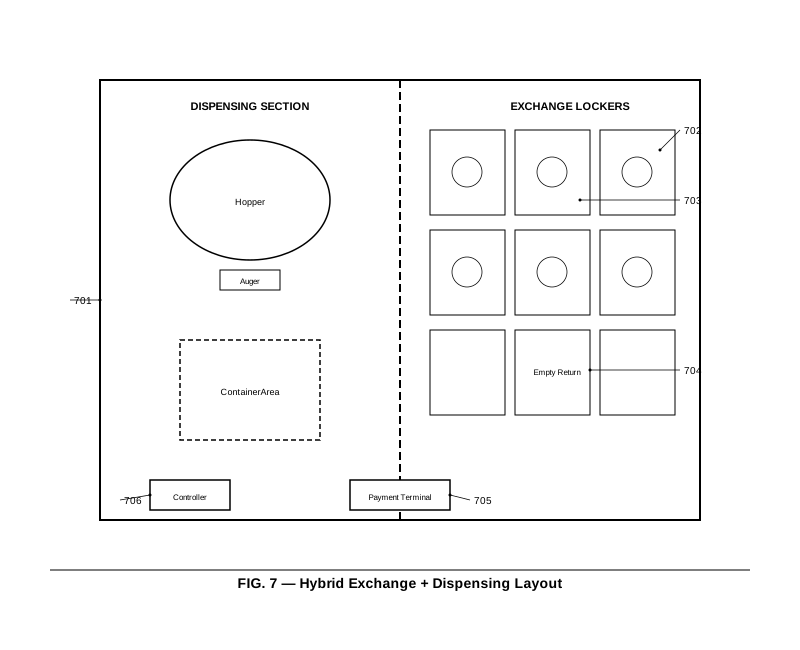
8.10 Hybrid Dispensing and Container Exchange Mode
Two modes from unified control:
- Bulk Dispensing Mode: Material metered from hoppers into customer/system container. Customer selects product/blend and quantity by weight.
- Container Exchange Mode: Customer deposits empty branded container → retrieves pre-filled container from electronically-locked locker. Containers tracked via RFID/NFC/QR. System validates, records exchange, issues deposit credit.
- Hybrid Operation: Both modes available simultaneously. Customer selects "Fill My Container" or "Exchange a Bucket" from touchscreen.
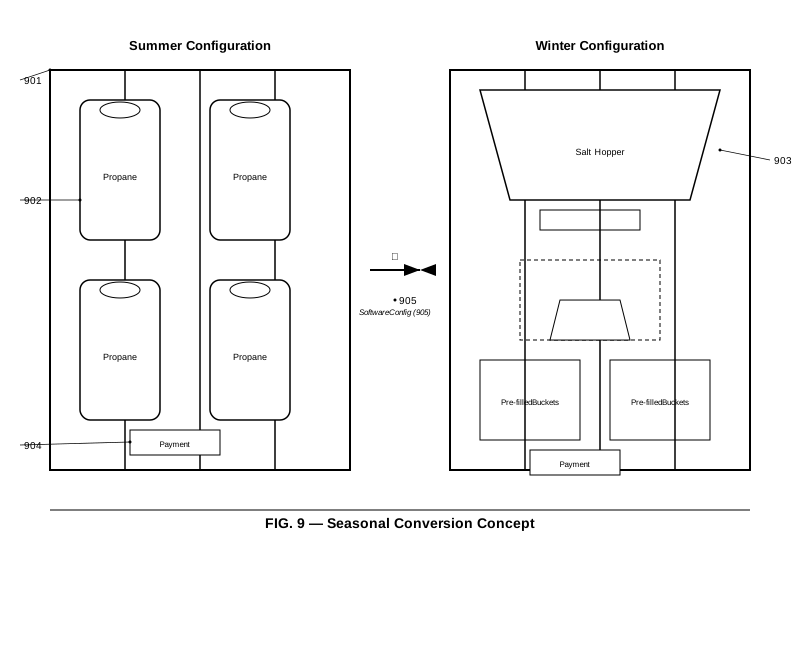
8.11 Seasonal Infrastructure Conversion System
Interchangeable product modules with standardized bolted flanges and quick-disconnect jaw couplings — module swap by single operator in ~30–60 min. Software reconfiguration via cloud platform updates product catalog, pricing, branding, inventory parameters, dispensing parameters, and safety parameters.
8.12 Power Supply and Environmental Hardening
Primary: 120V AC, 20A service with GFCI and MOV surge protection. Steady-state: 300–500W (heating), 100–200W (dispensing). Peak: <15A. Alternatives: Battery, solar, or hybrid configurations for off-grid/emergency deployment.
Environmental: Operating range -20°F to 100°F. IP55 enclosure, IP67 individual sensors/electronics. Three heating circuits. THWN-2 wiring in sealed conduit. All materials inherently corrosion-resistant (HDPE, UHMW, 316L SS, 304 SS with powder coat).
8.13 Container Tracking and Deposit System
RFID (UHF, ISO 18000-6C), NFC (ISO 14443/15693), and/or QR code tags on each branded container. Central database tracks: first fill date, fill-return cycles, last fill/return date and location, condition flags, customer account. Deposit accounting: initial $5–10 deposit, carried forward on exchanges, refunded on final return. Validation rejects counterfeit and expired containers.
8.14 Cloud Management Platform
Web-based operator dashboard with real-time status, historical analytics, revenue reporting, product mix analysis, and demand patterns. Fleet management: territory grouping, route optimization, comparative analytics, centralized pricing policy, role-based access. RESTful APIs and webhooks for partner integration (POS, ERP).
9. Alternative Embodiments
- Multi-Hopper Variant — Multiple hoppers with independent augers for higher-throughput deployments requiring simultaneous dry blending.
- Dispensing-Only Configuration — Omits exchange compartments, simplest deployment.
- Exchange-Only Configuration — Omits bulk dispensing, operates as smart locker exchange unit.
- Wall-Mounted Variant — Separated interface panel and dispensing mechanism.
- Trailer-Mounted Configuration — Mobile deployment for events, emergency supply, temp retail.
- Industrial-Scale Variant — 10–50 cu ft hoppers, 4–6″ augers for municipal/commercial use.
- Food-Grade Adaptation — NSF/ANSI 51 compliant for rice, grains, animal feed, humanitarian aid.
- Liquid CaCl₂ Injection (PRIMARY) — Liquid calcium chloride injection at point of dispensing, enabling Pro-tier product from single NaCl hopper. This is the primary architecture for multi-product delivery.
- Hybrid Payment Systems — Coins, currency, vouchers, SMS codes for low-banking environments.
10. Patent Claims (72 Total)
72 total claims including independent formulation claims 59–64, covering the core dispensing system, single-hopper + liquid CaCl₂ injection, hybrid exchange system, weather-responsive pricing, and product formulation IP.
An automated dispensing system for granular de-icing materials, comprising:
a) one or more storage hoppers, each configured to store a quantity of granular de-icing material and each having a discharge opening at a lower portion thereof, the hopper walls angled at a minimum of 55 degrees from horizontal to promote gravity-assisted material flow;
b) a metering mechanism comprising, for each hopper, a horizontally mounted auger screw conveyor positioned below the discharge opening and driven by an independently controllable electric motor, wherein the auger screw conveys granular material from the hopper discharge opening to a dispensing outlet at a metered volumetric rate determined by the rotational speed of the motor;
c) a sensor array configured to detect the presence and fill status of a container positioned at a container receptacle zone below the dispensing outlet, the sensor array comprising at least one container presence sensor and at least one weight measurement device;
d) a payment processing module configured to accept contactless electronic payment and authorize dispensing operations; and
e) a system controller operatively connected to the metering mechanism, the sensor array, and the payment processing module, the controller configured to receive a dispensing command upon payment authorization, operate the metering mechanism to dispense granular de-icing material into the container, monitor fill status via the sensor array during dispensing, and halt the metering mechanism when a target fill quantity is reached or an overflow condition is detected.
Multi-product blending with proportional auger control — plurality of hoppers with different materials, blending chamber, independently controlled auger speeds for customer-selectable or pre-programmed blend compositions.
Multi-sensor container detection — at least two IR break-beam pairs at different heights, platform scale with strain-gauge load cells in Wheatstone bridge with ADC and tare compensation, plus ultrasonic distance sensor and/or capacitive proximity sensor for independent overflow detection.
Anti-caking subsystem — vibration motor (pulsed mode), heater element (thermostatically controlled above dew point), and/or mechanical bridge-breaker (rotating shaft with paddles, low-speed motor).
Ground-level refill system — secondary intake hopper at pickup truck bed height (~30–36″), flexible screw conveyor to main hoppers, drive motor at discharge end pulling screw upward.
Remote monitoring & telemetry — cellular modem, inventory level sensors, periodic telemetry transmission (fill levels, transactions, status, environmental data) to cloud platform, remote command receiver (emergency stop, enable/disable, pricing updates).
Multi-source power (120V AC / battery / solar / hybrid) with GFCI, surge protector, and thermostatically controlled heater circuit for cold-weather operation.
NFC contactless payment (credit/debit/mobile wallets) plus external QR-code payment platform integration via HTTPS webhook authorization.
Modular retail-deployable enclosure — approximately 48″ × 30″ × 48″ form factor for gas stations, convenience stores, and grocery stores.
Propane cage-compatible form factor — exterior dimensions and mounting provisions compatible with standard retail propane exchange cage locations, no structural modification required.
A hybrid material distribution system, comprising:
a) a bulk dispensing subsystem with storage hopper, metering mechanism, and sensor array;
b) a container exchange subsystem with electronically-locked storage and receiving compartments;
c) a container identification reader for reading unique container identifiers;
d) a unified control system operating in bulk dispensing mode, container exchange mode, and managing inventory for both from a unified database; and
e) a payment processing module for transactions in either mode.
RFID/NFC/QR container tracking with lifecycle records (fill count, return count, dates, locations, condition status).
Deposit accounting module — initial deposit fee, carry-forward on exchanges, refund on final return, reject invalid/expired containers.
Electronically-lockable locker compartments arranged in grid/array configuration.
Reverse exchange mode — deposit container, receive deposit refund/credit without replacement.
A method for automated weather-responsive pricing and inventory management of de-icing materials at an unattended dispensing system, comprising:
a) receiving meteorological data (precipitation type, accumulation, storm duration, temperature);
b) applying a pricing algorithm computing a price multiplier based on storm severity;
c) adjusting per-unit price by applying multiplier to base price;
d) displaying adjusted price to customer;
e) monitoring inventory level; and
f) generating automated resupply notification when predicted demand exceeds inventory.
Tiered storm severity model with plurality of severity tiers, associated multiplier ranges, and operator-configurable maximum price cap.
Predictive demand based on weather data, historical sales, and time-of-day patterns; resupply recommendation to logistics system with quantity, inventory, and schedule.
Seasonal conversion method — physical module replacement, cloud-based software reconfiguration, resume automated dispensing with alternative product.
Multi-product independent dynamic pricing — separate hoppers with different materials, independently adjusted per-unit prices and blend formulation prices based on weather and respective inventory levels.
Claims Summary
| Claim | Type | Scope |
|---|---|---|
| 1 | Independent | Core automated granular de-icing material dispensing system |
| 2 | Dependent (1) | Multi-product blending with proportional auger control |
| 3 | Dependent (1) | Multi-sensor container detection (IR, load cell, ultrasonic, capacitive) |
| 4 | Dependent (1) | Anti-caking subsystem (vibration, heating, bridge-breaker) |
| 5 | Dependent (1) | Ground-level refill via flexible screw conveyor |
| 6 | Dependent (1) | Remote monitoring and telemetry with cloud platform |
| 7 | Dependent (1) | Multi-source power with GFCI, surge protection, heating |
| 8 | Dependent (1) | NFC payment + QR-based payment platform integration |
| 9 | Dependent (1) | Modular retail-deployable enclosure (48″×30″×48″) |
| 10 | Dependent (9) | Propane cage-compatible form factor |
| 11 | Independent | Hybrid dispensing + container exchange system |
| 12 | Dependent (11) | RFID/NFC/QR container tracking with lifecycle records |
| 13 | Dependent (11) | Deposit/credit accounting for container exchange |
| 14 | Dependent (11) | Electronically-lockable locker compartment configuration |
| 15 | Dependent (11) | Reverse exchange mode (return without replacement) |
| 16 | Independent | Weather-responsive dynamic pricing method |
| 17 | Dependent (16) | Tiered storm severity pricing model with price caps |
| 18 | Dependent (16) | Predictive demand and automated resupply recommendation |
| 19 | Dependent (16) | Seasonal product conversion method |
| 20 | Dependent (16) | Multi-product independent dynamic pricing |
11. Legal Boilerplate
Scope Disclaimer
The foregoing description of preferred and alternative embodiments is intended to be illustrative and not limiting. Various modifications, equivalents, substitutions, and alterations may be made by those skilled in the art without departing from the spirit and scope of the invention. The invention is defined not by the foregoing description, but by the claims appended hereto.
Provisional Filing Purpose
This document serves as a provisional patent application under 35 U.S.C. §111(b), establishing a priority date for the disclosed invention. The level of detail provided is intended to satisfy written description and enablement requirements of 35 U.S.C. §112.
Invention Ownership
The invention was conceived and reduced to practice by Keith Aubin. All rights including patent, continuation, divisional, and derivative rights are asserted by the inventor.
Filed as a Provisional Patent Application under 35 U.S.C. §111(b)
Inventor: Keith Aubin
Date: ____________, 2026
📐 Figure Gallery — All Patent Drawings
All 10 SVG figures from the V2 provisional patent application. Click any figure to view full size.
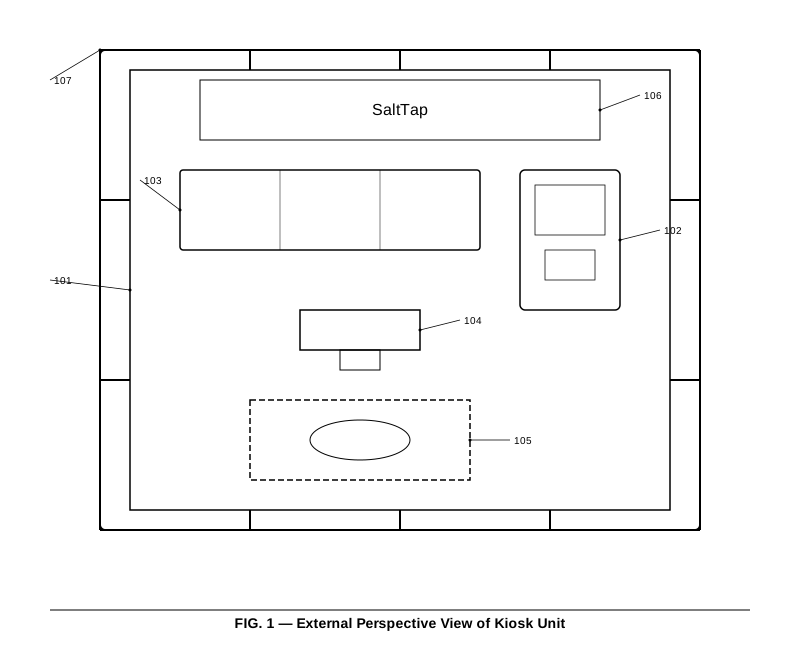
| Ref | Component |
|---|---|
| 101 | Enclosure |
| 102 | Payment terminal |
| 103 | Product selection display |
| 104 | Dispensing outlet |
| 105 | Container placement area |
| 106 | Signage area |
| 107 | Cage frame |
| Ref | Component |
|---|---|
| 201 | Hopper A — MgCl₂ |
| 202 | Hopper B — CaCl₂ |
| 203 | Hopper C — NaCl |
| 204 | Metering auger |
| 205 | Stepper motor |
| 206 | Blending chamber |
| 207 | Discharge valve |
| 208 | Dispensing chute |
| Ref | Component |
|---|---|
| 301 | Container |
| 302 | Load cell platform |
| 303 | IR break-beam emitter |
| 304 | IR receiver |
| 305 | Ultrasonic fill sensor |
| 306 | Guide rails |
| 307 | Dispensing nozzle |
| 308 | Capacitive overflow sensor |
| Ref | Component |
|---|---|
| 401 | Main controller (MCU) |
| 402 | Stepper motor drivers |
| 403 | Sensor array |
| 404 | Payment terminal |
| 405 | Cellular modem |
| 406 | Power management |
| 407 | Display |
| 408 | Heating system |
| 409 | Weather API input |
| 410 | Cloud management platform |
| Ref | Component |
|---|---|
| 601 | Secondary intake hopper |
| 602 | Flexible screw conveyor tube |
| 603 | Main hopper |
| 604 | Tri-clamp quick-disconnect |
| 605 | Diverter valve |
| 606 | Drive motor |
| Ref | Component |
|---|---|
| 701 | Dispensing section |
| 702 | Exchange lockers |
| 703 | Filled bucket compartment |
| 704 | Empty bucket return |
| 705 | Shared payment terminal |
| 706 | Shared controller |
| Ref | Component |
|---|---|
| 801 | Weather API (NWS/NOAA) |
| 802 | Weather processor |
| 803 | Storm severity index |
| 804 | Pricing engine |
| 805 | Inventory level sensor |
| 806 | Base price table |
| 807 | Dynamic price display |
| 808 | Inventory engine |
| 809 | Resupply alert |
| 810 | Operator notification |
| Ref | Component |
|---|---|
| 901 | Cage frame |
| 902 | Summer product modules |
| 903 | Winter dispensing module |
| 904 | Shared payment system |
| 905 | Seasonal software config |
| Ref | Component |
|---|---|
| 1001 | Upper zone — hoppers/storage |
| 1002 | Middle zone — dispensing area |
| 1003 | Lower zone — electronics/power |